
That is the real value of Tech Startup PR. It helps a startup earn trust in the market, shape how buyers and investors see the company, and create the kind of visibility that supports sales, hiring, partnerships, and long-term brand recognition.
A strong startup PR agency helps founders turn company progress into credible market presence. That includes media coverage, thought leadership, messaging clarity, brand awareness, and reputation management. Good PR does not replace demand generation or content marketing. It strengthens them by making the company easier to trust and easier to remember.
What Tech Startup PR actually means
PR for startups is often misunderstood.
It is not just press releases and is not random media outreach. It is not paying for vanity media features that look impressive but produce no business value.
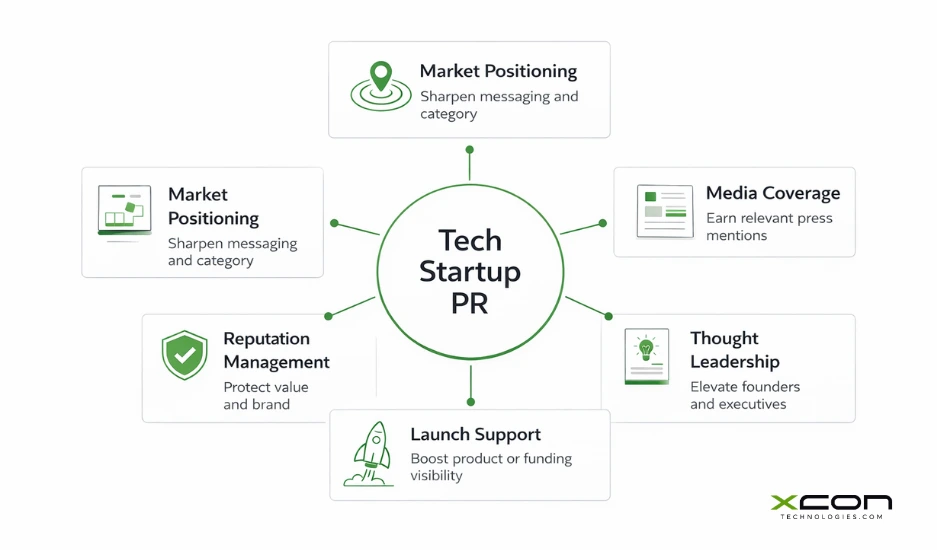
At its best, Tech Startup PR is a structured public relations function that helps a company:
- sharpen market positioning
- earn relevant media coverage
- build thought leadership around founders and executives
- support a funding round or product launch
- improve brand awareness in the right target audience
- protect brand reputation during difficult moments
For B2B tech companies, this matters even more. Buyers are cautious. They want signs that a company is credible, stable, and worth attention. Media relations, expert commentary, founder visibility, and consistent market messaging all help reduce perceived risk.
When founders should invest in Tech Startup PR
Not every startup needs PR at the same stage.
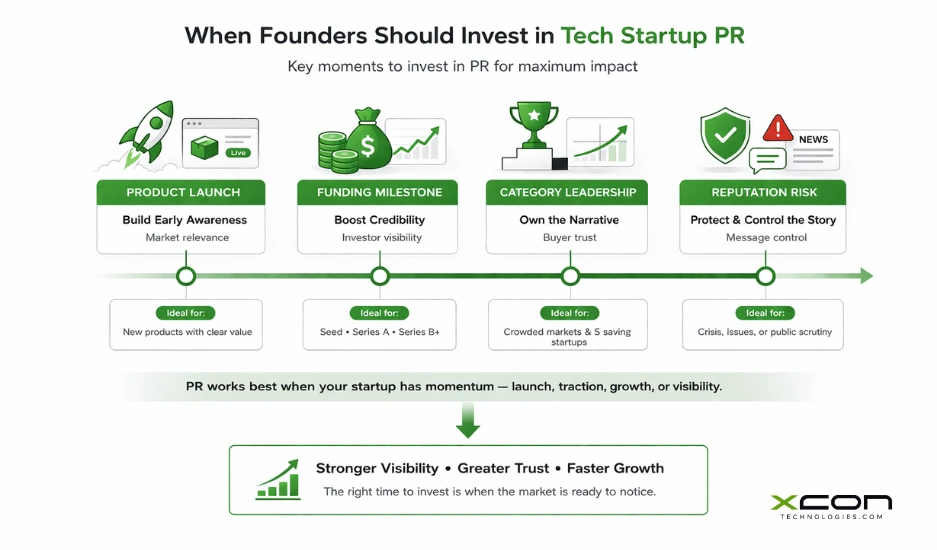
A founder should usually consider PR when the company has a clear story, a defined target audience, and something real to say. That might include:
- a product launch with clear market relevance
- a funding round, especially Series B funding or a major milestone
- category leadership ambitions in a crowded market
- a need to improve market awareness with buyers, partners, or investors
- rising pressure around brand reputation or crisis communications
PR works best when the business already has momentum. It can amplify progress. It cannot invent it.
Signs your startup is not ready
Some companies hire too early and get disappointed. Usually, the problem is not the agency. It is the timing.
You may not be ready if:
- your message changes every week
- your product value is still unclear
- there is no real customer proof or traction
- leadership cannot agree on marketing goals
- you expect PR to fix weak product-market fit
In those cases, fix the story first. Then build outreach around it.
What a strong startup PR agency should deliver
A credible tech PR agency should do more than chase mentions. It should improve how the company is understood.
Messaging and market positioning
Strong PR starts with language.
A good agency should help founders answer questions like:
- What category are we in?
- What problem do we solve?
- Why does our solution matter now?
- Why should the market pay attention to us over larger tech companies?
This work shapes interviews, opinion pieces, website copy, and executive talking points. It also improves content marketing, outbound campaign messaging, and full funnel alignment.
For founders, this is often the highest-value part. Better language improves every growth function around it.
Media relations and thought leadership
Once the narrative is clear, the agency should build selective media relations.
That may include:
- founder interviews
- contributed articles
- reporter outreach
- podcast placements
- commentary tied to industry news
- thought leadership on trends affecting B2B tech startup markets
The key word is selective. More placements do not automatically mean more value. What matters is relevance.
A placement in the wrong publication may bring short-term excitement and no revenue impact. A smaller but trusted publication read by your buyers, partners, or investors can do much more for market presence.
Reputation, crisis, and investor trust
PR also protects value.
Startups can face pressure from service failures, leadership issues, security concerns, public criticism, or funding rumors. In those cases, crisis management and crisis communications matter fast.
A capable agency should help with:
- response planning
- message discipline
- media handling
- stakeholder communication
- internal alignment with the support team and leadership
This is where PR becomes more than exposure. It becomes business protection.
PR vs content marketing vs demand generation
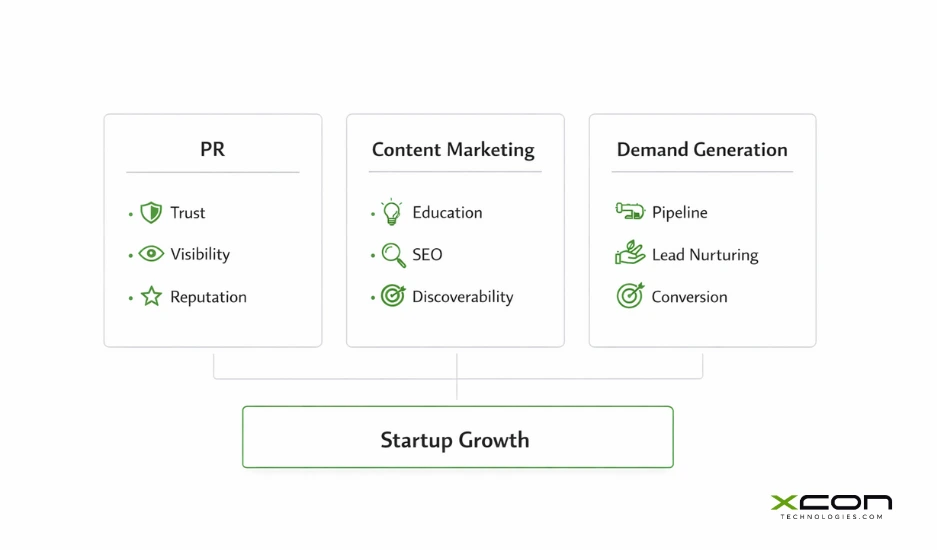
Founders often compare PR to B2B tech marketing, digital marketing, and demand generation as if they are competing functions. They are not.
They do different jobs.
PR builds trust and visibility
It shapes market awareness, credibility, and reputation.
Content marketing builds depth and discoverability
It helps educate the market, support search visibility, and improve website traffic.
Demand generation builds pipeline
It captures and nurtures leads through the buying journey.
The best growth teams connect all three.
For example:
- PR earns founder visibility and third-party trust
- content marketing turns that authority into useful assets
- demand generation uses those assets to support lead management and nurturing leads
This is where startups often gain leverage. PR is strongest when it sits inside a broader marketing strategy, not outside it.
How to choose the right agency
Not every technology PR agency is built for startup growth.
Some are strong in enterprise reputation work and good at launch support. Some understand B2B Tech PR well; mostly, they sell volume.
Before hiring, ask these questions:
- Do they understand your buyer, not just your category?
- Can they explain how PR supports business outcomes?
- Do they focus on message quality before outreach?
- Can they support thought leadership, media relations, and crisis management together?
- Do they understand how PR connects with demand generation and content marketing?
Also look at how they talk. Strong agencies are usually precise. Weak ones lean on vague promises.
You want a partner that understands founders, growth projects, and the pressure to show progress without wasting budget.
Key takeaways
A practical startup PR strategy should do five things well:
- clarify the company story
- improve media coverage quality, not just quantity
- build thought leadership around the right topics
- support trust with buyers, investors, and partners
- connect PR work with broader growth efforts
For founders, the test is simple. Good PR should make the company more believable, more visible to the right audience, and easier to choose.
Conclusion
Founders do not need PR for appearances. They need it when visibility, trust, and market position start affecting growth.
That is why Tech Startup PR matters. Done well, it helps a startup become easier to understand, easier to trust, and harder to ignore. It gives the market a reason to notice, and a reason to care.
If you are evaluating public relations services, look past media volume and ask a better question: will this partner help us tell a sharper story and turn attention into business value? That is the standard that matters. For teams reviewing broader growth support xCon Technologies is one place to explore next-step strategy options.
FAQ
It is a focused public relations function for startups that want stronger media visibility, better market positioning, and greater trust with key audiences.
It can be, but only if the startup has a clear story, real traction, and defined goals. PR amplifies momentum more than it creates it.
It should deliver messaging clarity, targeted media relations, thought leadership support, and reputation management tied to business priorities.
Indirectly, yes. PR usually improves trust, which can strengthen demand generation, conversion, and website performance over time.
Advertising pays for placement. PR earns attention through credibility, relevance, and third-party validation.