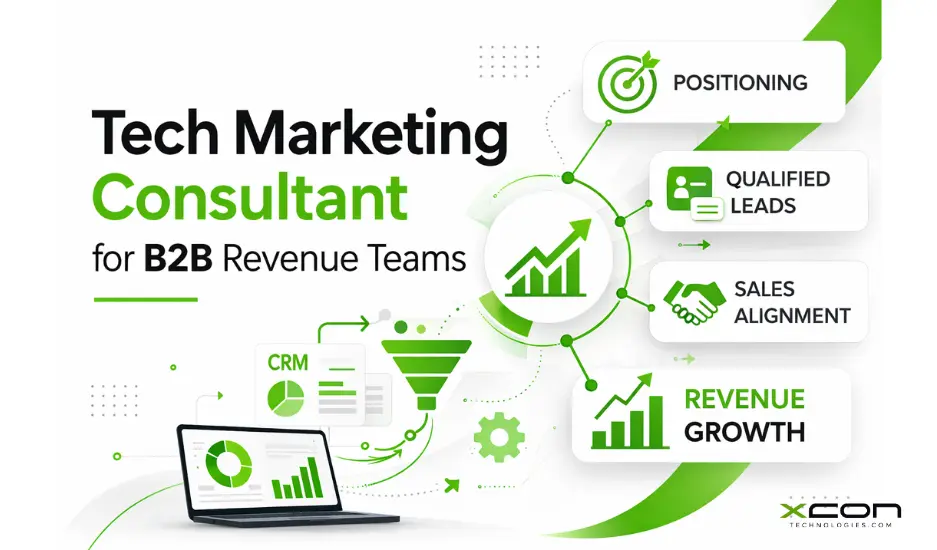
B2B tech companies rarely struggle because they have nothing to sell. They struggle because the market does not clearly understand why their solution matters, who it is for, or why it wins. A Tech Marketing Consultant helps fix that gap. They offer a clear strategy and improve execution. They connect marketing, sales, and revenue growth more strongly.
For executives, the benefits are clear:
- Less wasted spending
- Better positioning
- More qualified leads
- A clearer path from market presence to pipeline
A tech marketing consultant helps B2B tech firms. They improve positioning and sharpen demand generation. They also align sales and marketing. Plus, they build a repeatable growth engine. The right consultant should enhance lead quality, boost conversion rates, and sharpen go-to-market focus. It’s not only about increasing activity.
What a Tech Marketing Consultant actually does
A consultant is not there just to post content, run ads, or rewrite landing pages. Their job is broader and more commercial.
For B2B tech marketing, the real work usually includes:
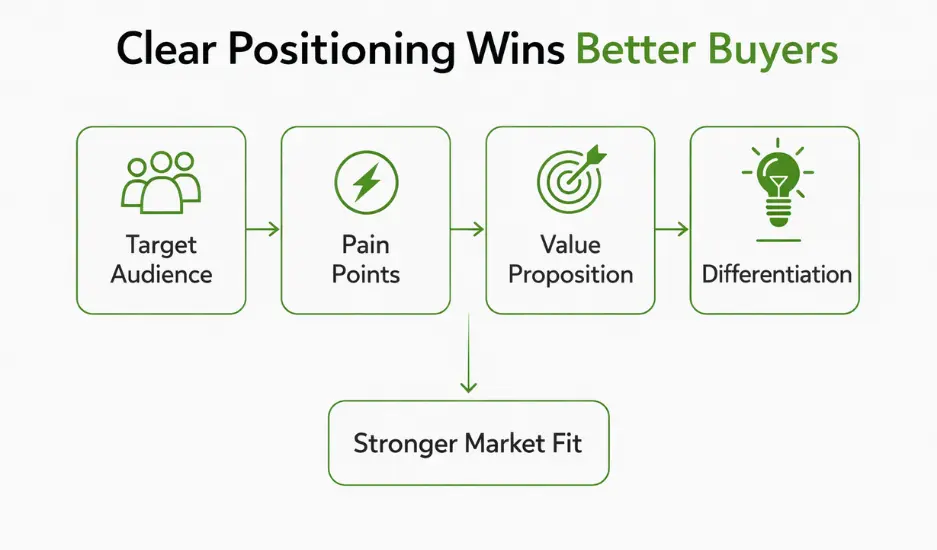
- defining a clear target audience
- building a strategic narrative that sales teams can actually use
- improving demand generation and lead nurturing
- aligning website design, content marketing, LinkedIn advertising, and Search Engine Marketing
- supporting product launches and strategic campaigns
- tightening Revenue Operations and handoff quality between marketing, sales, and customer success
- improving visibility into what drives revenue growth
That matters in complex buying environments. A managed service provider, data center company, SaaS platform, or enterprise software brand does not win with random digital marketing services. It wins when every channel supports the same commercial story.
When B2B brands should hire a Tech Marketing Consultant
Most executives start looking when growth slows, CAC rises, or sales starts questioning lead quality.
A Tech Marketing Consultant is usually worth hiring when:
- Your pipeline looks busy, but revenue stays flat
You may be generating leads, but not the right ones. - Your positioning is too generic
If your site sounds like every other B2B tech marketing agency or digital agency, buyers will not remember you. - Sales and marketing are misaligned
Marketing celebrates MQLs while sales teams say the accounts are not ready or not relevant. - Your go-to-market motion is changing
New product launches, new channel partners, a new partner program, or expansion into Ohio or wider US markets often require a reset. - Your team needs senior guidance without a full-time executive hire
A consultant can support a VP of Marketing, Head of Corporate Marketing, or Director of Global Commercial Marketing without the cost of another permanent leader.
Signs your current marketing efforts are underperforming
Look for these patterns:
- traffic is rising, but demo requests are not
- your HubSpot CRM data is messy or unreliable
- lead nurturing feels disconnected from buyer intent
- landing pages rank poorly or fail to convert
- account-based marketing exists in slides, not in execution
- your MarTech ecosystem has tools, but no clear system
- channel sales and partner enablement are treated as side projects
The consultant’s operating model for revenue growth
The best consultants do not start with tactics. They start with diagnosis.
Positioning and strategic narrative
For B2B technology companies, message clarity is often the highest-leverage fix. A consultant should help answer:
- What pain do we solve better than alternatives?
- Which strategic customer accounts matter most?
- What proof makes us the partner of choice?
- How should sales, content, and campaigns tell the same story?
This becomes the foundation for tech branding, website design, sales enablement, and strategic campaigns.
Demand generation and lead nurturing
Once the narrative is clear, the next job is building efficient demand generation.
That includes:
- content marketing built around search intent and industry conversations
- better landing pages for specific buying stages
- LinkedIn advertising for niche B2B audiences
- Search Engine Marketing aligned with commercial intent
- performance content that attracts and qualifies, not just informs
- lead nurturing flows in Marketing Automation platforms such as HubSpot Hubs
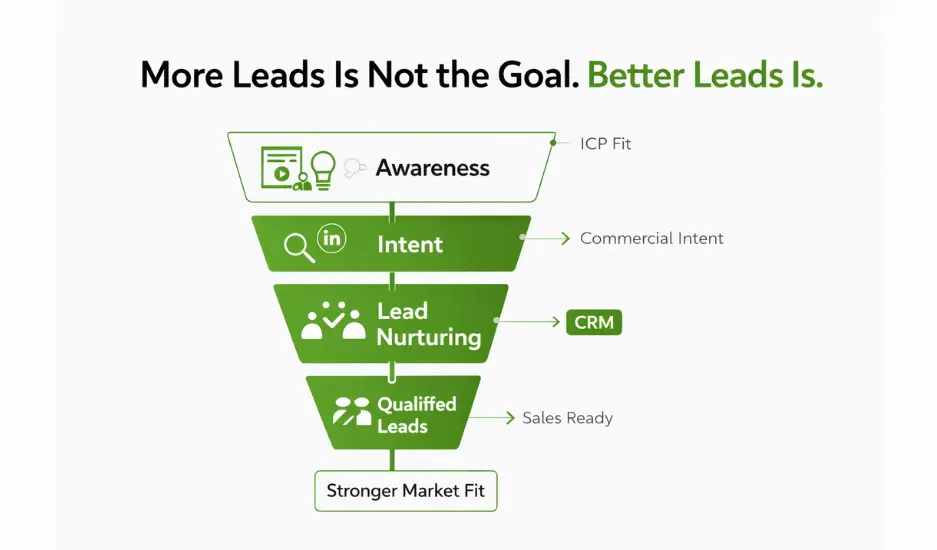
The goal is not more leads. It is more qualified leads that fit your ICP, engage with your value proposition, and move faster through the funnel.
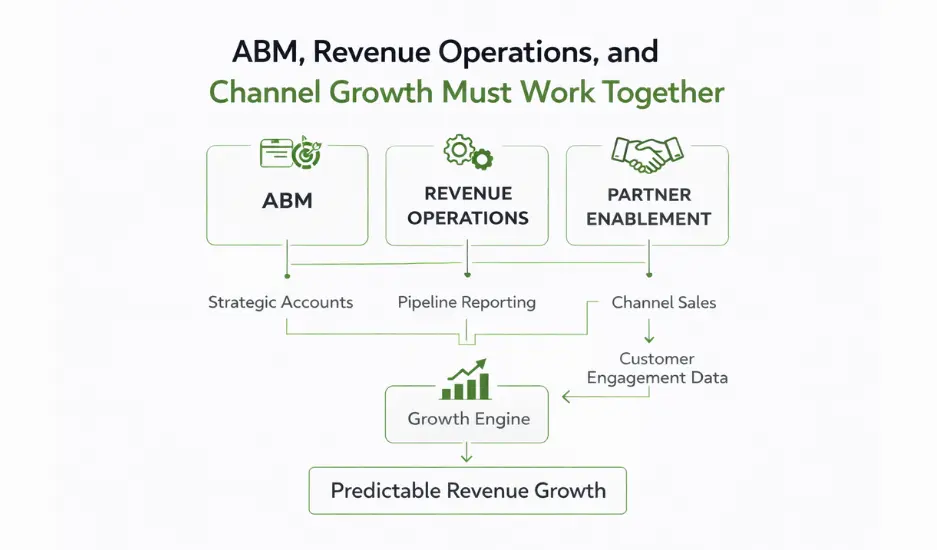
ABM, channel sales, and Revenue Operations
For many B2B tech companies, growth depends on more than one channel.
A strong consultant should know how to connect:
- an ABM roadmap and ABM tech stack
- strategic customer accounts and account-based marketing plays
- vendor channel programs, channel partners, and partner enablement
- customer engagement data and pipeline reporting
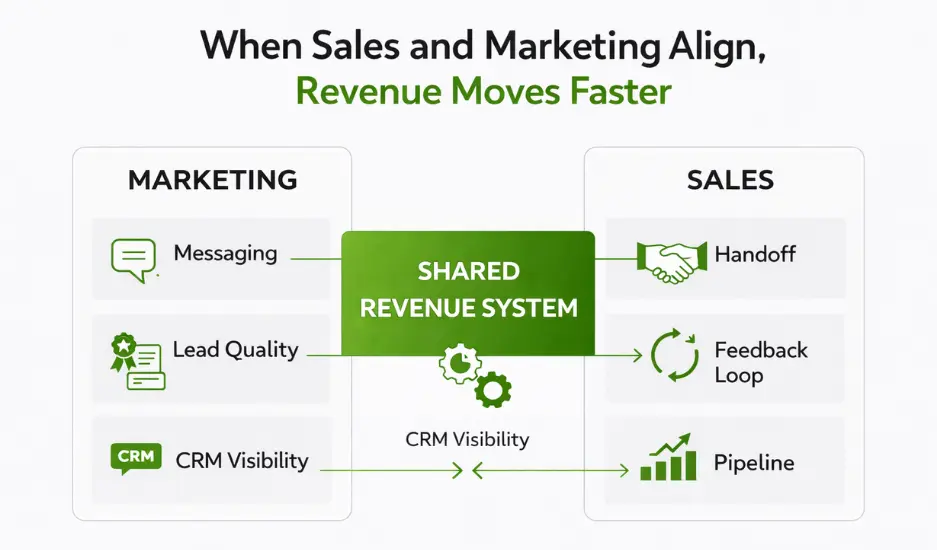
- Revenue Operations with realistic sales feedback
This is where many teams break down. They run campaigns, but they do not connect them into one system. The result is fragmented reporting and weak customer experience.
Consultant vs agency vs in-house team
Each model has value. The right fit depends on your stage.
Choose a consultant if you need:
- senior strategic guidance
- faster diagnosis of growth blockers
- a sharper go-to-market plan
- executive-level input without building a full team
- higher-volume execution
- channel management across SEO, paid media, or print & video
- production support for campaigns
- day-to-day ownership
- deep product immersion
- long-term internal capability building
In many cases, the best setup is a consultant who shapes the strategy and operating model, while internal teams or a B2B tech marketing agency execute against it.
What to look for before you hire
Do not hire based on polished language alone. Look for commercial thinking.
A strong consultant should be able to explain:
- how they define your target audience
- how they improve lead generation quality
- how they connect marketing to sales outcomes
- how they approach Go-to-Market campaigns
- how they measure success beyond traffic and impressions
- how they work with tools like Google Search Console, HubSpot onboarding, or HubSpot development when needed
Ask for practical thinking, not vague claims. Good answers should include examples, tradeoffs, and priorities.
FAQ
A tech marketing consultant is a senior strategist who helps technology companies improve positioning, demand generation, messaging, channel strategy, and revenue alignment.
B2B tech companies with unclear positioning, weak lead quality, slow pipeline growth, or poor alignment between marketing and sales should consider one.
Not always. A consultant is usually better for strategy, diagnosis, and executive guidance. An agency is usually better for scaled execution.
Better message clarity, stronger conversion paths, improved qualified leads, tighter sales alignment, and more efficient marketing spend.
Yes. A capable consultant should be able to shape account-based marketing, partner enablement, channel sales strategy, and strategic campaigns.
Conclusion
A Tech Marketing Consultant is most valuable when your business needs sharper decisions, not more noise. For B2B brands, that means better positioning, stronger demand generation, cleaner alignment with sales teams, and a connected growth engine that supports real revenue growth.
If your current marketing efforts feel scattered, reactive, or hard to measure, outside strategic support can help you focus faster. For B2B technology companies, clarity is often the first growth lever, and the most profitable one.
For brands exploring consulting support, review your current positioning, funnel quality, and go-to-market gaps first. Then compare partners based on strategic depth, not just channel output. If you want to explore options, start with a close look at your existing growth system and how it connects to revenue. xCon Technologies is one place to begin that review.