A tech branding agency offers more than logo design. It connects complex innovations with market adoption. For early-stage companies, trust is key. It gains you time, investment, and loyal users in a skeptical market.
You might have the best code in the world, but if investors and users don’t trust you, you won’t scale.
To build brand loyalty, even in a skeptical market like Silicon Valley or Ohio, focus on these steps:
- Understand your audience’s concerns.
- Address them openly.
- Build trust with transparent communication.
- Deliver consistent quality.
- Engage with your customers regularly.
These actions can transform skepticism into loyalty.
Quick Summary
- Trust is a revenue driver: It reduces sales cycles, lowers churn, and attracts Series E funding.
- Strategy first: Authentic positioning and market analysis must happen before visual design.
- Consistency is key: Your visual identity and messaging must align across all digital touchpoints.
- Social proof scales success: Use case studies and testimonials to validate your claims.
Why Is Trust Critical for Tech Startups?
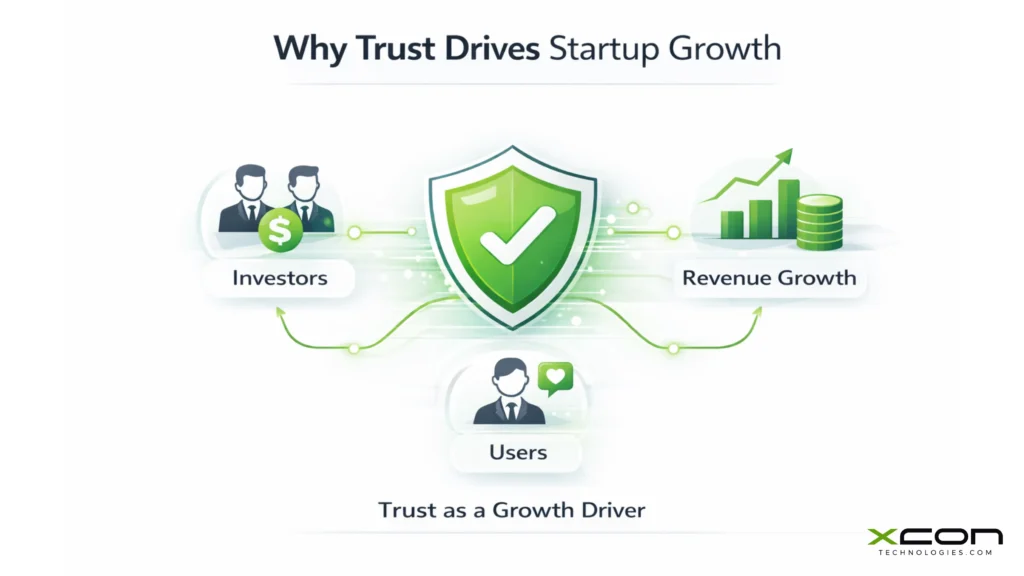
Trust is the primary buying signal in the B2B and SaaS world. Without it, potential customers view your solution as a risk rather than an asset. A specialized agency helps you navigate this by establishing credibility from day one.
Overcoming Market Skepticism
In saturated markets, buyers are wary of “vaporware” products that promise the world but fail to deliver. Tech startups often face scrutiny regarding longevity and security. Building a brand that signals stability helps overcome this doubt, proving you are a viable long-term partner.
Trust as a Growth Multiplier
Trust accelerates every metric that matters. It opens doors to strategic partnerships, secures enterprise adoption, and attracts investors. When stakeholders trust your brand equity, they are more willing to bet on your vision, fueling growth from seed rounds to IPO.
Business Risks of Low Trust
Ignoring trust creates friction. Low credibility leads to lost conversions, agonizingly long SaaS sales cycles, and high customer churn. If users question your security solution or data handling, they will simply move to a competitor with a stronger reputation.
How Do We Build Strategic Foundations?
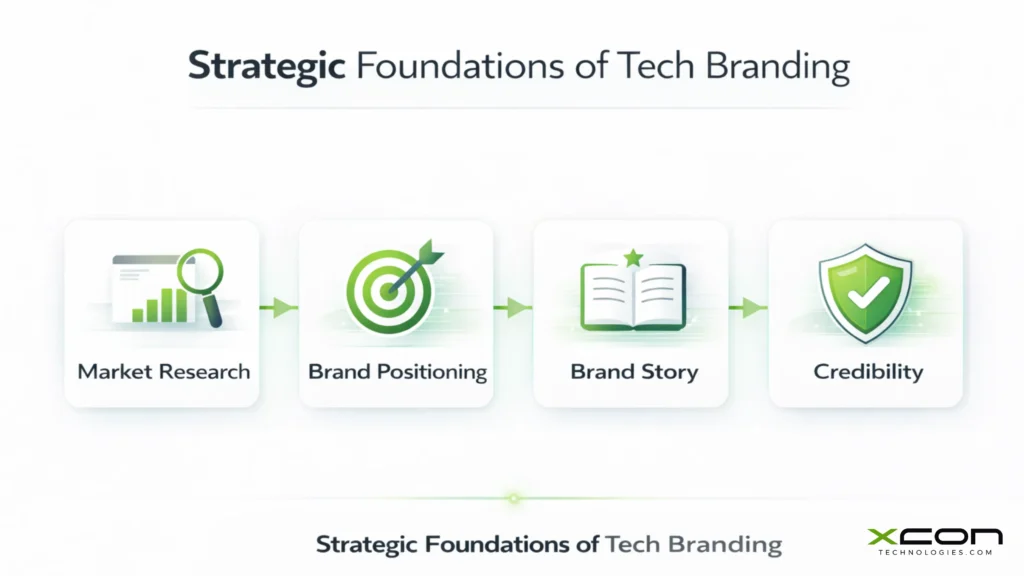
Before a single pixel is colored, a tech branding agency establishes a strategic baseline. This phase ensures your brand is built on truth and market reality rather than assumptions.
- Market and Audience Intelligence: You must understand who you are talking to. Agencies conduct deep market research to define your Ideal Customer Profile (ICP) and analyze competitive positioning. This prevents you from shouting into the void.
- Authentic Brand Positioning: Credibility comes from clarity. You need to define what makes you different without overpromising. Authentic positioning relies on honesty about what your product can do today, not just in the future.
- Brand Storytelling in Tech: Human narratives make complex products relatable. Good storytelling shifts the focus from “what the code does” to “how it helps the human.” This emotional connection is often the deciding factor in B2B purchases.
How Does Identity Signal Credibility?
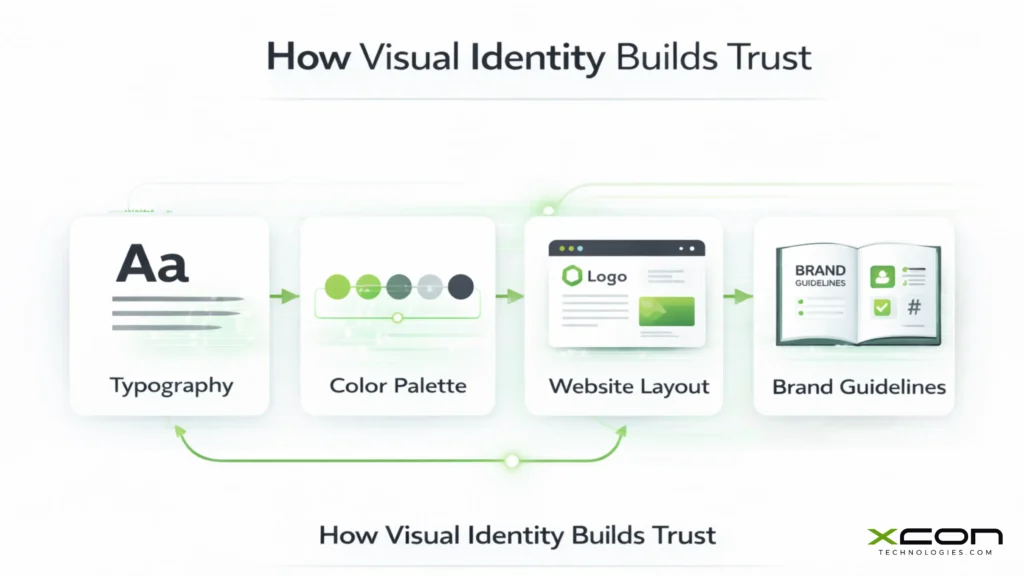
Your visual identity is the first handshake with your audience. It needs to look professional, established, and intentional to signal that you are a serious player in the industry.
- Trust-Focused Visual Identity: Colors, typography, and visual structure influence psychology. A chaotic look suggests a chaotic product. Clean, accessible design suggests usability and reliability.
- Clear and Confident Brand Messaging: Your copy should be free of jargon. Clear messaging demonstrates authority. When you explain complex infrastructure solutions simply, you prove you truly understand your subject matter.
Can Design Improve the Digital Experience?
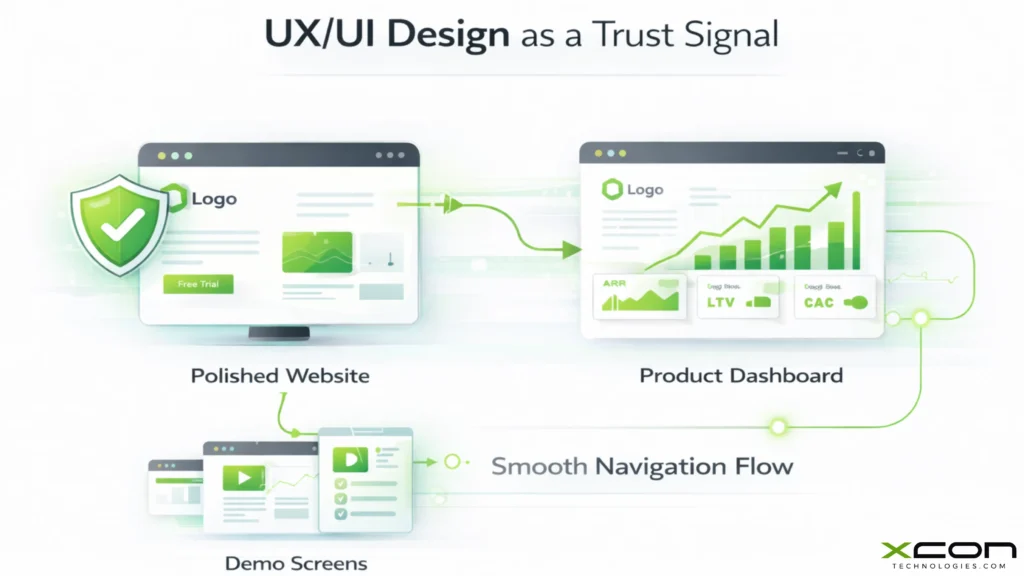
A branding agency knows that your product interface and website are brand ambassadors. If the user experience (UX) is frustrating, users will assume the technology is broken.
User-First UX/UI Design
Usability equals reliability. When a user can navigate your digital services intuitively, they subconsciously trust the engineering behind it. A polished UX/UI design reduces friction and fosters a sense of safety and competence.
Product Demos That Build Confidence
Transparency builds trust. Instead of hiding behind gated content, effective branding uses product demos to show the tool in action. Real use cases act as proof that your solution works as advertised.
Credible Digital Touchpoints
Every interaction counts. From your landing pages to your onboarding experiences, consistency is vital. If your marketing materials look premium but your support emails look amateur, you break the trust chain.
How Do You Scale Trust with Content?
Once the foundation is set, you scale trust by demonstrating authority. This involves proving you are a thought leader, not just a service provider.
- Authority-Driven Content Strategy: Focus on education. Content marketing should solve problems, not just sell. By sharing expertise on industry standards or market analysis, you position your brand as a helpful guide.
- Social Proof and Validation Signals: Buyers follow the herd. Highlight testimonials, media mentions, and third-party certifications. Case studies are particularly powerful in tech, as they provide data-backed evidence of success.
- Community-Led Trust Building: Engage with your users. Building a community creates brand advocates who vouch for you. Their word is often worth more than your paid advertising.
How Do We Maintain Trust at Scale?
Trust is hard to gain and easy to lose. As you grow, maintaining that initial credibility requires vigilance and adaptation.
- Brand Consistency: Ensure alignment across marketing, sales, and product teams. The tone in a sales email should match the tone on your website.
- Brand Evolution: Startups pivot. Your brand must evolve without alienating early adopters. Communicate changes clearly to show you are maturing, not floundering.
- Measuring Trust: Track KPIs like Net Promoter Score (NPS), retention rates, and brand sentiment. These metrics tell you if your trust-building efforts are paying off.
Choosing the Right Tech Branding Agency
Not all agencies speak “tech.” You need a partner who understands the nuances of SaaS, funding rounds, and digital transformation.
What to Look for in an Agency
Look for a portfolio that includes relevant tech companies. Ask about their process: do they prioritize strategy? Do they understand your technology? They should be asking you about your total addressable market, not just your favorite colors.
Benefits of Tech-Focused Branding Expertise
Generalist agencies often struggle to simplify complex tech concepts. A specialized agency knows how to translate features like “Cloudflare Ray ID” or “SQL command” security into compelling value propositions for non-technical buyers.
Pro Tips for Startups
- Don’t fake it: Authenticity beats polish every time.
- Invest early: Fixing a bad reputation is harder than building a good one.
- Empower employees: Your team is your biggest brand asset.
- Audit often: Regularly check your online presence for inconsistencies.
Final Thoughts
Trust is an investment, not an expense. In the fast-moving tech world, the companies that prioritize building a trustworthy brand are the ones that survive and thrive. By partnering with the right tech branding agency, you secure a competitive advantage that pays dividends for years to come.
FAQ
A tech branding agency builds the visual and verbal identity of technology companies. They align business strategy with design to create a brand that builds trust, attracts investors, and acquires customers.
Costs vary widely based on scope and agency reputation. Early-stage branding might range from $15k to $50k, while comprehensive enterprise rebranding can exceed $100k. View it as a capital investment, not an expense.
Ideally, before your Series A funding or a major product launch. You want to have a solid brand foundation in place when you start scaling your marketing and sales efforts.
Freelancers are great for execution, but agencies provide holistic strategy. An agency brings a team of strategists, writers, and designers to ensure your brand drives business goals, not just aesthetic ones.
A typical engagement lasts 6 to 12 weeks. This includes research, strategy, visual identity design, and the creation of brand guidelines and assets.