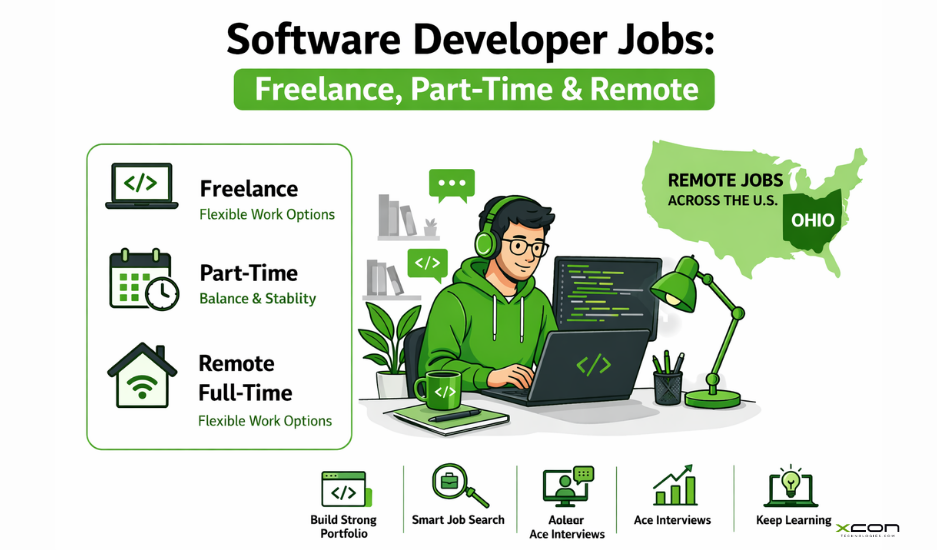
Remote software developer jobs provide flexible options, including freelance, part-time, and full-time roles. Each path supports different goals like income stability, independence, or career growth.
To succeed, developers should:
- Build strong portfolios.
- Use smart job search strategies.
- Understand how U.S. companies, especially in Ohio, hire and manage remote teams.
The Shifting Landscape
The developer job market has changed fast. Companies now hire across borders. Remote roles, freelance contracts, and part-time work dominate hiring trends.
Why This Guide Matters
Developers want flexibility. Businesses want skilled talent. This shift creates more remote job opportunities but also more competition.
Today, remote software developer jobs sit at the center of this change. They offer access to global teams and scalable career paths.
Understanding the Modern Developer Workforce
Increased Demand for Specialized Skills
US companies now seek niche expertise. Skills in AI automation, cloud systems, and scalable web platforms drive demand. Even mid-sized firms in Ohio compete for top developers.
Developer Desire for Flexibility
Many developers prefer control over their schedules. Freelance and part-time roles support better work-life balance and personal growth.
Technology Enables Remote Work
Tools like cloud IDEs, collaboration platforms, and version control systems make distributed teams efficient. Teams now function without physical offices.
Freelance Software Developer Path
What Freelancing Means
Freelancers work independently. They take projects from multiple clients. Many choose this path for control and income potential.
Advantages of Freelancing
- High earning potential
- Flexible schedule
- Diverse project experience
- Direct client interaction
Challenges to Consider
- Income instability
- Client acquisition pressure
- No employer-provided benefits
How to Grow
Build a strong portfolio. Focus on niche skills like AI automation or mobile app development. Use platforms and referrals to find consistent work.
Legal and Business Basics
Freelancers must manage contracts, taxes, and compliance. US-based clients often expect formal agreements and clear deliverables.
Part-Time Software Developer Roles
Why Part-Time Works
Part-time roles suit developers who want stability with flexibility. Many companies hire part-time developers for ongoing support work.
Where to Find Jobs
Use job boards with filters like Work Type and Search Radius. Set up a job alert to track new listings.
How to Succeed
- Deliver consistent output
- Communicate clearly with teams
- Manage time across multiple commitments
Benefits and Rights
Some US companies offer partial benefits like training programs or access to learning platforms. However, benefits vary widely.
Remote Software Developer Jobs
The Remote Working Model
Remote work removes location barriers. Developers collaborate across time zones using structured workflows.
Benefits of Remote Work
- Access to global companies
- Reduced commute time
- Flexible work environment
Challenges to Manage
- Communication gaps
- Isolation
- Time zone conflicts
Optimize Your Setup
Use reliable internet, version control, and tools like task trackers. A clean workspace improves focus.
Collaboration in Remote Teams
Strong communication drives success. Teams rely on async updates, documentation, and clear workflows.
Company Culture and Benefits
Top US companies invest in remote culture. They offer training programs, mentorship, and wellbeing initiatives. This supports long-term developer retention.
Your Job Search Strategy
Build a Strong Portfolio
Show real projects. Highlight results, not just code. Include web apps, APIs, or AI-based tools.
Advanced Job Search Techniques
- Use filters like job titles and remote roles
- Track opportunities with alerts
- Customize each application
Improve Your Job Search Experience
Focus on quality over quantity. Tailor your resume for each role. Use keywords that match job descriptions.
Master Interviews
Prepare for technical and behavioral questions. Many companies test real-world problem-solving skills.
Avoid Recruitment Fraud
Check company credibility. Avoid offers that request payment. Verify job listings through official platforms.
Choosing Your Path
Key Differences
| Work Type | Flexibility | Income Stability | Best For |
| Freelance | High | Low to Medium | Independent developers |
| Part-Time | Medium | Medium | Balanced lifestyle |
| Remote Full-Time | Medium | High | Career growth and stability |
Pros and Cons
Pros
- Flexible work options
- Access to global opportunities
- High demand for skilled developers
Cons
- Competitive market
- Need for self-discipline
- Limited benefits in freelance roles
Common Mistakes to Avoid
- Applying without customizing your resume
- Ignoring portfolio quality
- Focusing only on salary, not growth
- Falling for recruitment fraud
- Not learning new technologies
Best Option for Different Goals
- Choose freelance for independence and higher earning potential
- Choose part-time for flexibility with some stability
- Choose remote full-time for structured growth and benefits
The Future of Flexible Development
Continued Growth
Remote hiring will expand. US companies will keep building distributed teams.
Focus on Wellbeing
Employers now invest in developer wellbeing and training. This improves productivity and retention.
Business Impact
For businesses in Ohio and across the US, flexible hiring helps scale faster. It allows access to global talent without relocation costs.
Key Takeaways
- Flexible work models now dominate software development careers
- Remote roles offer strong growth and global access
- Freelance and part-time roles suit different career goals
- Smart job search strategies improve success rates
- Continuous learning remains essential
FAQs
They are roles where developers work from home or any location while collaborating with distributed teams.
They offer flexibility but income varies. Long-term clients improve stability.
Use job boards with filters like work type and set alerts for new postings.
Yes, many US companies offer competitive salaries based on skills and experience.
Verify companies, avoid upfront fees, and use trusted job platforms only.
Conclusion
The rise of remote software developer jobs has reshaped how developers build careers. Each path offers unique benefits. Success depends on skills, strategy, and adaptability. Focus on building real expertise and strong portfolios. This approach opens doors across freelance, part-time, and remote roles in the evolving US tech market.