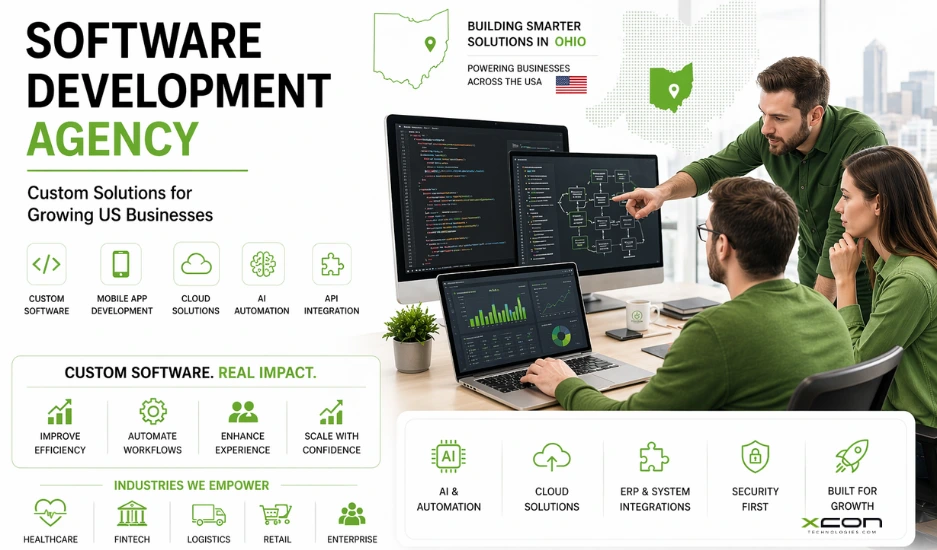
A software development agency builds tailored digital systems that match specific business needs instead of relying on generic tools. It helps companies improve efficiency, automate workflows, and scale operations using custom software, mobile apps, and web platforms. For US businesses, especially in regions like Ohio, these solutions support growth, data-driven decision-making, and long-term digital transformation across industries such as finance, healthcare, logistics, and retail.
Introduction:
Businesses in the US face growing pressure to digitize operations and improve efficiency. A software development agency helps companies design systems built around their workflows instead of forcing teams to adapt to rigid tools.
In Ohio and across the US, companies increasingly invest in custom software to improve customer experience, streamline operations, and support long-term scalability. This includes web platforms, mobile apps, enterprise systems, and AI-driven automation.
Custom vs Off-the-Shelf Software
What is Custom Software Development?
Custom software development means building applications specifically for a business’s goals, users, and workflows. It focuses on flexibility, scalability, and integration.
Strategic Advantage of Custom Solutions
Custom systems support:
- Unique business processes
- Better integration with existing tools
- Higher security control
- Long-term scalability
The Limitations of Generic Solutions
Off-the-shelf tools often create problems like:
- Limited customization
- Poor integration with internal systems
- Unnecessary features
- Hidden scaling costs
Comprehensive Custom Software Development Services
A modern software development agency delivers full-cycle digital solutions.
Key Service Areas
Strategic Consulting & Discovery
Teams analyze business goals, workflows, and technical gaps before development begins.
UX/UI Design
Strong UX/UI design improves customer experience and internal usability.
Full-Stack Development
Developers build both frontend and backend systems using modern frameworks.
API Integration Services
Systems connect through APIs for seamless data flow across platforms.
Cloud Solutions & Architecture
Cloud-based infrastructure supports scalability and performance.
Legacy Modernization
Older systems are upgraded into modern, efficient platforms.
QA & Testing
Testing ensures stability, performance, and security.
Development Process
A structured approach ensures consistent results.
Agile Methodologies and Iterative Development
Agile enables continuous improvement through short development cycles.
DevOps Integration
DevOps streamlines deployment and improves operational efficiency.
Dedicated Teams
Solutions architects and engineers collaborate closely with business stakeholders.
Industry-Specific Custom Software Solutions
Healthcare and Telemedicine
HIPAA-compliant systems support patient management and telemedicine platforms.
FinTech and Financial Systems
Secure financial applications support transactions, reporting, and compliance.
Logistics and Supply Chain
Automation improves inventory tracking and delivery optimization.
eCommerce Platforms
Custom web and mobile applications enhance customer engagement and sales.
ERP and Enterprise Systems
ERP integrations unify finance, HR, and operations in one system.
Advanced Technologies Driving Modern Software
AI & Machine Learning
AI-powered systems automate workflows, enhance predictions, and improve customer engagement.
Blockchain Technology
Smart contracts and digital tokenization improve transparency and trust.
Big Data and Analytics
Data warehouses help businesses make informed decisions.
IoT Integration
Connected devices enable real-time tracking and automation.
Table: Custom Software vs Off-the-Shelf
| Feature | Custom Software | Off-the-Shelf Software |
| Flexibility | High | Limited |
| Cost | Higher upfront | Lower upfront |
| Scalability | Strong | Restricted |
| Integration | Seamless | Partial |
| Security | Custom-controlled | Vendor-dependent |
Pros and Cons of Custom Software
Pros
- Tailored to business needs
- Strong scalability
- Better system integration
- Higher security control
Cons
- Higher initial investment
- Longer development time
- Requires ongoing maintenance
Common Mistakes to Avoid
- Choosing tools before defining requirements
- Ignoring scalability needs
- Poor UX/UI planning
- Weak integration strategy
- Underestimating data security requirements
When to Choose Custom Development
Custom software works best when:
- Business processes are unique
- Existing tools limit growth
- Data security is critical
- Scaling operations is a priority
- Multiple systems need integration
Key Takeaways
- Custom software aligns technology with business goals
- Scalability and integration are key advantages
- AI and cloud solutions are shaping modern systems
- Agile development improves delivery outcomes
- Long-term value outweighs initial cost in most cases
Conclusion
A software development agency plays a key role in helping businesses modernize operations through tailored digital solutions. From enterprise systems to AI-powered tools, custom software supports scalability, efficiency, and innovation.
For US companies, including those in Ohio, investing in custom platforms ensures better control over data, workflows, and customer experience. A well-planned approach to software development builds long-term business resilience and growth.
FAQ
It designs and builds custom digital systems like apps, web platforms, and enterprise software for business needs.
Yes for scaling businesses, because it offers flexibility, integration, and long-term control.
Timelines vary, but most projects take several weeks to months depending on complexity.
Yes, APIs and integration services allow smooth connection with legacy systems.
Yes, security is built based on specific business requirements and compliance needs.