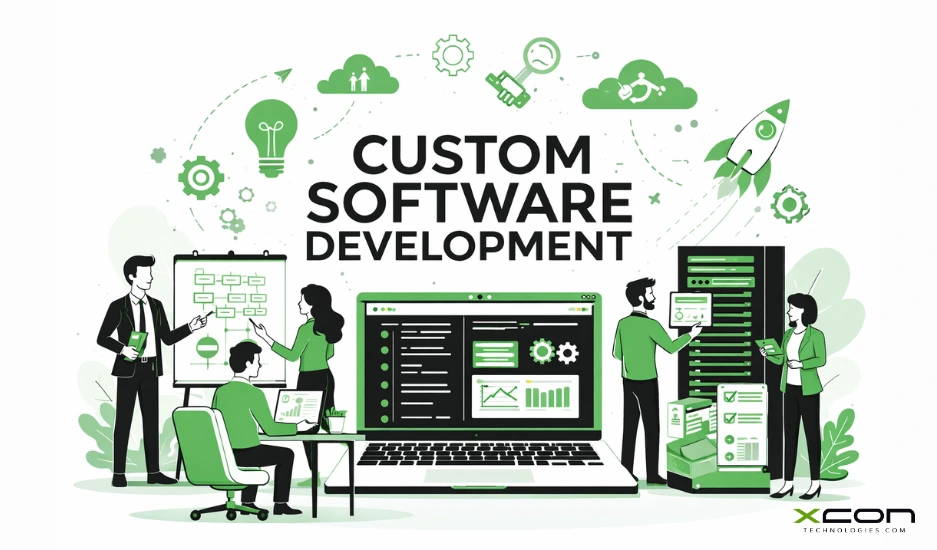
Custom software development helps US businesses build tailored systems that match exact workflows, scale with growth, and improve efficiency. Unlike generic tools, it supports automation, data insights, and better user experiences. Companies in Ohio and across the US use it to modernize operations, reduce long-term costs, and stay competitive in fast-moving digital markets.
Why Custom Software Matters for US Businesses
Limits of Off-the-Shelf Tools
Off-the-shelf software works for basic needs. It fails when workflows become complex. Many US businesses face limits in customization, integration, and performance. These tools often force teams to adjust their processes instead of supporting them.
Competitive Advantage Through Custom Solutions
Custom software development gives businesses control. You build features based on your exact needs. This improves speed, user experience, and decision-making. Companies in Ohio’s manufacturing, healthcare, and logistics sectors often rely on tailored systems to stay efficient.
Scalability and Future Readiness
Custom systems grow with your business. You can add features, handle more users, and integrate new tools without rebuilding from scratch. This reduces long-term risk.
Automation and Efficiency
Custom platforms automate repetitive tasks. They reduce manual work and errors. Businesses gain faster workflows and better resource use. This becomes critical for scaling teams.
Custom Software Development Services in the USA
Strategy and Product Planning
Teams define goals, user needs, and technical direction. Clear planning reduces risks and aligns business outcomes.
UX and UI Design
Design teams create simple, user-focused interfaces. Good design improves adoption and productivity.
Web Application Development
Custom web apps support internal systems, customer portals, and dashboards. Many US businesses prioritize scalable web platforms.
Mobile App Development
Mobile apps help businesses reach users directly. They support customer engagement and operational mobility.
Enterprise Software and Modernization
Legacy systems slow growth. Modernization improves performance, security, and integration with new technologies.
Cloud and DevOps
Cloud infrastructure supports flexibility and cost control. DevOps practices improve deployment speed and reliability.
AI and Data Solutions
AI automation helps analyze data, predict trends, and automate decisions. This area is growing fast across US industries.
Integration and API Development
Custom software connects tools like CRMs, ERPs, and third-party services. This creates a unified system.
Quality Assurance and Testing
Testing ensures performance, security, and reliability before launch.
Maintenance and Continuous Improvement
Software needs updates. Continuous support keeps systems secure and aligned with business goals.
The Development Process
Discovery and Requirements
Teams gather detailed requirements. They define business goals, user needs, and technical constraints.
Design and Architecture
Experts create system architecture and design flows. This step ensures scalability and performance.
Agile Development
Developers build features in iterations. This allows feedback and quick adjustments.
Testing and Deployment
Teams test functionality, security, and performance. After validation, they deploy the system.
Post-Launch Support
Ongoing updates improve features and fix issues. This keeps the system aligned with business growth.
Choosing the Right Development Partner
Proven Expertise
Look for experience in your industry. A strong portfolio shows real-world capability.
Communication and Collaboration
Clear communication reduces delays and errors. A collaborative approach improves outcomes.
Security and Compliance
US businesses must follow strict data regulations. Your partner should prioritize security.
Scalability and Innovation
Choose a partner who supports future growth and new technologies.
Pricing and Value
Focus on long-term value, not just upfront cost. Cheap solutions often increase costs later.
Advantage of a US-Based Partner
Working with a software development company in the USA improves communication and compliance. It also aligns better with local business needs, especially in regions like Ohio where industries have specific requirements.
Real Business Impact
- Efficiency and Cost Savings
Automation reduces manual work. Businesses save time and operational costs.
- Better Customer Experience
Custom apps and platforms improve usability. This leads to higher customer satisfaction.
- Data-Driven Decisions
Custom systems provide real-time insights. Businesses can act faster and smarter.
- Market Differentiation
Unique software creates a competitive edge. It helps businesses stand out.
- Long-Term Growth
Custom solutions support scaling. They adapt as the business evolves.
Comparison Table
| Feature | Off-the-Shelf Software | Custom Software |
| Flexibility | Limited | High |
| Scalability | Restricted | Fully scalable |
| Integration | Basic | Advanced |
| Cost Over Time | Higher due to limits | Optimized long-term |
| Competitive Advantage | Low | High |
Pros and Cons
Pros
- Fully tailored to business needs
- Scales with growth
- Supports automation and efficiency
- Improves user experience
Cons
- Higher initial investment
- Longer development time
- Requires ongoing maintenance
Common Mistakes to Avoid
- Choosing price over quality
- Ignoring scalability needs
- Skipping proper planning
- Underestimating maintenance
- Not aligning software with business goals
When to Choose Custom Software
Choose custom software development when:
- Your workflows are unique
- Existing tools limit growth
- You need strong integrations
- You plan to scale rapidly
- Data and automation are critical
Key Takeaways
- Custom software supports long-term growth and efficiency
- US businesses use it to gain competitive advantage
- Proper planning and partner selection are critical
- It enables automation, integration, and scalability
- It delivers better ROI over time
Conclusion
Custom software development gives US businesses control, flexibility, and long-term value. It supports automation, improves efficiency, and helps companies scale with confidence. For Ohio-based businesses and beyond, investing in tailored solutions can drive real growth and competitive advantage in today’s digital economy.
FAQ
It builds software tailored to specific business needs instead of using generic tools.
It costs more upfront but reduces long-term operational costs.
Most projects take 3 to 9 months depending on complexity.
Growing businesses, enterprises, and companies with complex workflows.
Yes, for scalability, flexibility, and integration needs.