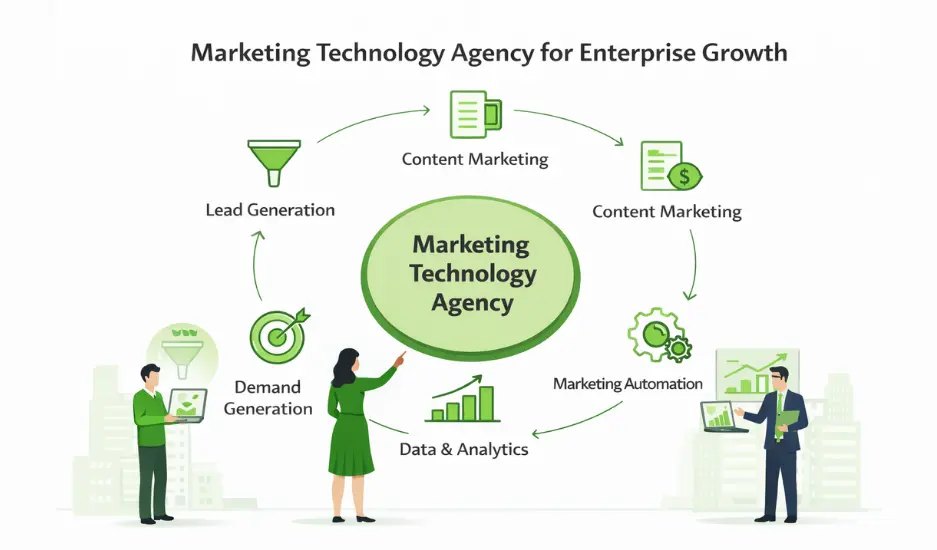
Enterprise B2B tech companies work in a highly competitive space today. Marketing is tougher now. Sales cycles are long, buyer journeys are complex, and tech changes quickly. This makes things harder than in traditional industries. This is where a specialized Marketing Technology Agency becomes essential.
Enterprises are moving away from scattered marketing efforts. They are working with agencies. These agencies mix B2B marketing strategy, demand generation, martech integration, and data analytics. Together, they create one growth system.
A modern Marketing Technology Agency helps businesses create scalable lead generation pipelines. They also boost market presence and turn interest into qualified leads.
The Strategic Imperative for B2B Tech Growth
Today, tech companies compete in a digital world. They focus on product innovation. They also communicate their value clearly.
B2B SaaS platforms and Managed Service Providers need consistent campaigns across channels. They should use modern martech tools to scale effectively.
Navigating the Complex B2B Technology Landscape
The tech landscape is changing fast. New and existing technologies are helping companies attract and convert buyers.
Challenges enterprises face include:
- Long and complex sales cycles
- Many stakeholders in buying decisions
- Intense competition among category-leading companies
- Fragmented B2B Ecosystem
- Difficulty aligning sales and marketing teams
A clear strategy is key. Without it, marketing budgets may drive traffic but won’t yield qualified leads.
The Unique Value of a Specialized B2B Tech Marketing Agency
A B2B tech marketing agency has skills that brand consultancies and PR firms often lack. They provide unique expertise that others don’t.
They understand:
- The buyer psychology of enterprise tech companies
- The importance of technical content marketing
- How to implement Marketing Automation systems
- How to build an integrated ABM roadmap
The result is a marketing system. It brings in new logos, boosts share of wallet, and improves customer success.
What is a B2B Technology Marketing Agency and Why Do You Need One?
What is a Marketing Technology Agency?
A Marketing Technology Agency is a specialized firm. It blends marketing strategy, tech platforms, and data analytics. This helps businesses generate demand, capture leads, and boost revenue growth. These agencies use martech tools, automation systems, and digital marketing strategies. They do this to boost marketing performance.
Defining a B2B Technology Marketing Agency
A B2B tech marketing agency focuses specifically on high-tech industries, including:
- B2B SaaS
- AI and automation companies
- Managed Service Providers
- enterprise technology companies
Their services typically include:
| Service Area | Key Activities |
| Strategy | Market positioning, messaging |
| Demand Generation | Paid ads, SEO, campaigns |
| Content Marketing | blogs, case studies, whitepapers |
| Martech | automation tools and CRM integration |
| ABM | targeting strategic customer accounts |
This integrated approach ensures marketing aligns directly with revenue outcomes.
Beyond In-House Limitations: The Strategic Advantages of a Partner
Many companies depend on internal teams. But, internal marketing departments often have limitations, like:
- Lack of specialized match expertise
- Limited content development resources
- Difficulty scaling strategic campaigns
A Marketing Technology Agency fills these gaps. It brings in industry specialists, uses proven frameworks, and leverages advanced tools.
Focus on Outcomes: Revenue, Growth, and Market Leadership
The primary goal of TECH B2B Marketing is not vanity metrics.
It focuses on measurable outcomes such as:
- Lead generation
- Higher search rankings
- More qualified leads
- Increased pipeline velocity
- Shorter sales cycles
Companies like Shield AI and other tech firms use structured demand generation strategies. This helps them reach enterprise buyers effectively.
Core Pillars of B2B Tech Marketing Strategy
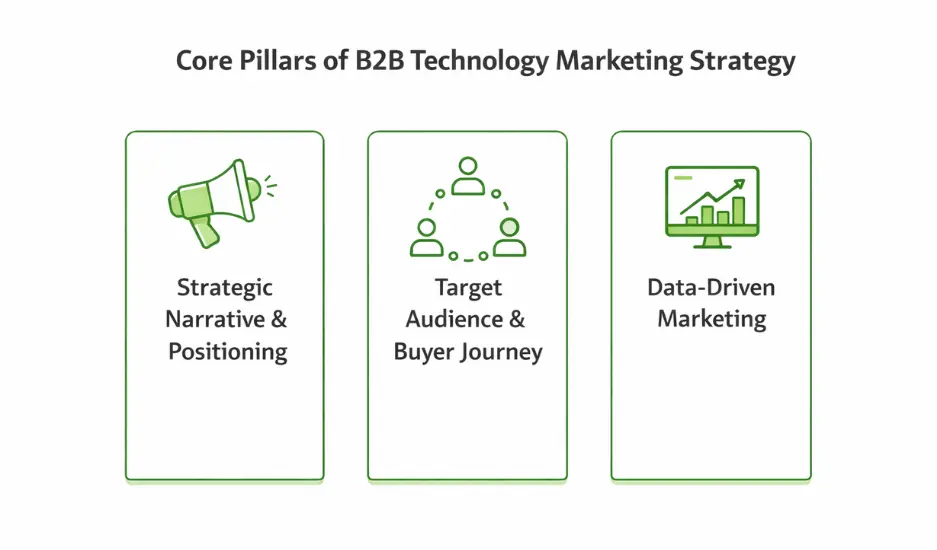
Successful enterprise marketing requires more than campaigns it requires a structured strategic framework.
Crafting a Differentiated Strategic Narrative and Positioning
Enterprise buyers do not buy products. They buy solutions and outcomes.
This is why strategic narrative development is essential.
Strong narratives:
- explain the problem clearly
- highlight innovation
- position companies as category leaders
AI firms often mix case studies, product demos, and technical content. This shows their value clearly.
Deep Understanding of the Target Audience and Buyer Journey
Enterprise buyers often involve:
- CTOs
- Procurement leaders
- Account executives
- Technical decision makers
A successful B2B marketing strategy maps the full journey:
- Awareness
- Evaluation
- Decision
- Adoption
- Expansion
Understanding the target audience ensures marketing messages resonate with each stakeholder.
Data-Driven Strategy & Performance Measurement
Modern marketing efforts rely heavily on analytics.
Common tools used by agencies include:
- Google Analytics
- CRM dashboards
- predictive analytics systems
Enterprise marketing teams also track operational data using platforms such as:
- AWS Cost Explorer
- AWS Budgets
- AWS Trusted Advisor
These insights help optimize campaigns and divide resources effectively.
Driving Demand & Accelerating Pipeline: Key Marketing Disciplines in Action
Enterprise marketing success requires a combination of specialized strategies.
Content Marketing as a Strategic Growth Engine
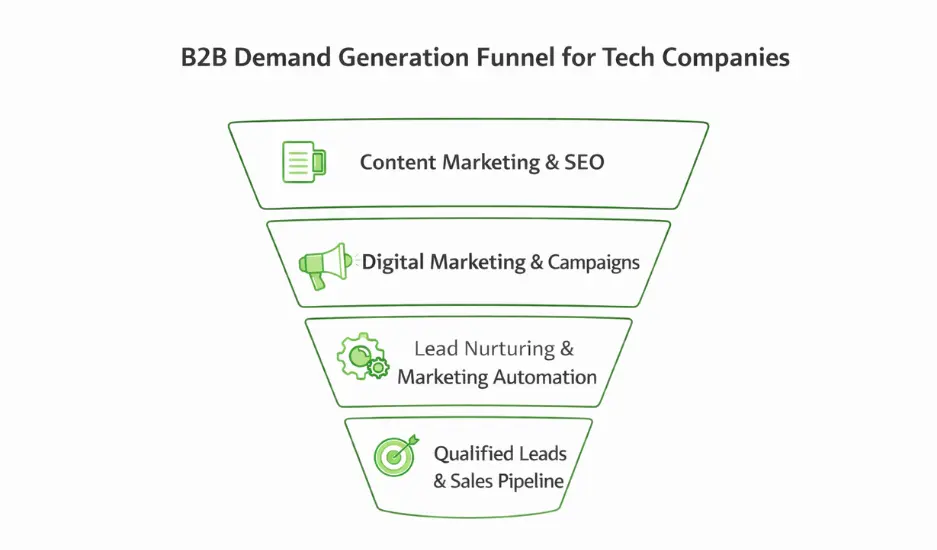
Content Marketing remains the backbone of B2B growth.
High-impact assets include:
- case studies
- industry reports
- technical whitepapers
- product explainers
- Landing Pages
Effective content creation helps tech companies:
- build authority
- educate buyers
- support lead nurturing
Example: A weekly newsletter sharing industry insights keeps decision makers engaged.
Precision Digital Marketing & Demand Generation
Demand generation involves attracting and converting high-quality prospects.
Channels often include:
- Google Ads
- SEO
- LinkedIn campaigns
- retargeting ads
- webinars
A Marketing Technology Agency connects these channels to marketing automation systems. This helps scale results.
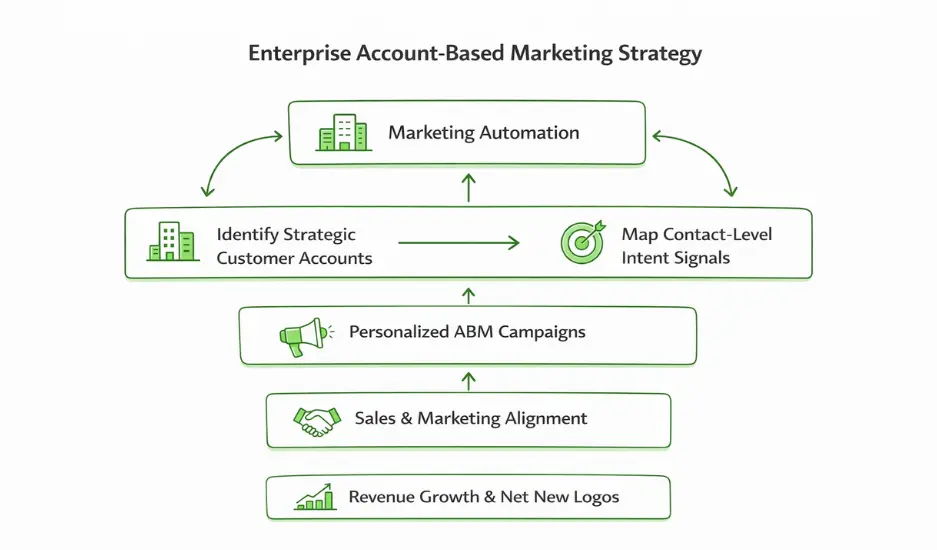
Account-Based Marketing (ABM) for High-Value Targets
For enterprise deals, Account-Based Marketing is often the most effective strategy.
ABM strategy focuses on:
- strategic customer accounts
- contact-level intent signals
- customized messaging
A typical ABM roadmap includes:
- Identifying target accounts
- Building an ABM tech stack
- Personalizing outreach
- Measuring engagement
This approach helps companies gain new clients and boost spending from current ones.
Brand-Building & Market Presence Through Strategic Communications
Enterprise growth also depends on strong market presence.
This includes:
- media exposure
- industry conversations
- partnerships
- thought leadership
Some agencies mix marketing and public relations strategies. This helps them grow their influence in the B2B ecosystem.
The Integrated Martsch Ecosystem: Fueling Efficiency and Insights
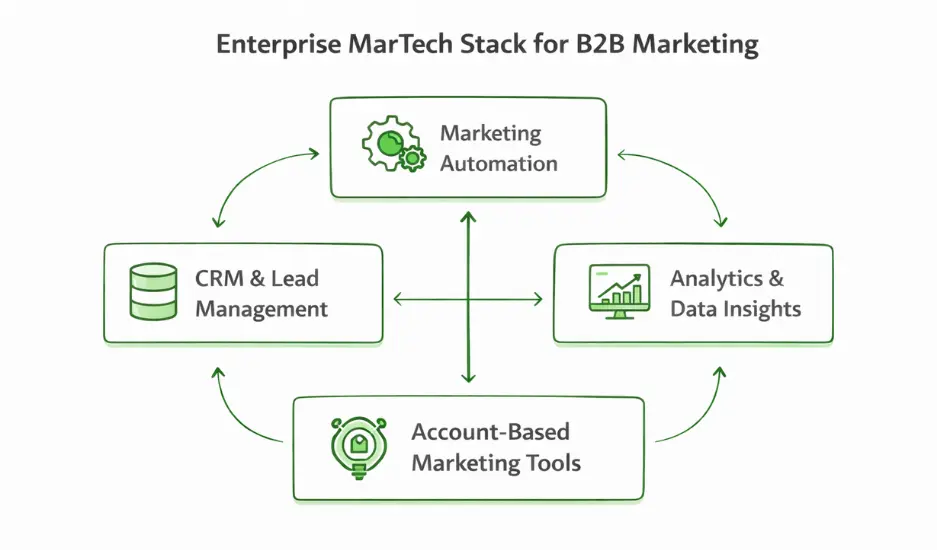
Modern B2B marketing is impossible without technology.
Optimizing Your Marketing Automation & CRM Stack
A strong Martsch stack integrates:
- CRM platforms
- email automation
- lead scoring systems
- campaign management tools
These systems allow companies to scale lead nurturing and track buyer behavior.
Overcoming Martsch Integration Barriers for Seamless Operations
One of the biggest enterprise challenges is Martsch Integration Barriers.
Common issues include:
- disconnected data systems
- incompatible tools
- fragmented customer insights
A Marketing Technology Agency solves this by implementing unified data architectures.
Advanced Analytics for Actionable Intelligence
Analytics platforms help marketing teams answer questions like:
- Which campaigns generate the best qualified leads?
- Which channels shorten sales cycles?
- Which Landing Pages convert best?
Using predictive analytics enables predictive personalization, improving conversion rates across campaigns.
Beyond Acquisition: Fostering Customer Success and Expansion
Marketing does not stop after acquisition.
Marketing’s Role in Customer Retention and Advocacy
Customer retention is often more profitable than new acquisition.
Marketing teams support customer success through:
- onboarding content
- technical training programs
- product education
Satisfied customers often become brand advocates.
Cultivating Brand Loyalty and Evangelism
When marketing and customer success teams collaborate, companies build communities around their products.
This leads to:
- organic referrals
- stronger brand trust
- increased share of wallet
The Future-Proof B2B Tech Agency: Adapting to an Evolving Landscape
The automation space and enterprise tech markets evolve rapidly.
Embracing Existing and Emerging Technologies
Leading agencies experiment with technologies such as:
- AI-driven personalization
- predictive analytics
- automation platforms
- conversational marketing
These tools allow enterprises to scale faster while maintaining personalized engagement.
Agile Strategies for Dynamic Markets
A successful xGrowth marketing firm operates with agility.
Instead of rigid plans, agencies continuously refine strategies based on:
- campaign data
- market shifts
- buyer behavior
Choosing Your Strategic Partner: What to Look for in a B2B Tech Marketing Agency
Selecting the right agency can significantly influence growth.
Deep Industry Expertise and Proven Track Record
Look for agencies that have worked with:
- B2B SaaS companies
- high-tech industries
- enterprise technology companies
Industry expertise ensures faster execution and better results.
A Strategic and Data-Driven Approach Focused on ROI
Your agency should provide:
- performance dashboards
- measurable KPIs
- transparent reporting
Marketing should always align with revenue growth.
Comprehensive Service Offering & Integrated Method
The best agencies combine many disciplines:
- strategy
- content development
- digital marketing
- analytics
- sales consultation
An integrated method prevents fragmented campaigns.
Cultural Fit and Transparent Partnership
Marketing partnerships work best when both sides collaborate openly.
Look for agencies that:
- share insights regularly
- adapt strategies quickly
- act as a partner of choice, not just a vendor.
Conclusion
Enterprise technology markets are complex, competitive, and rapidly evolving.
A specialized Marketing Technology Agency helps companies thrive. It brings together strategy, martech tools, and demand generation systems. This creates a powerful growth engine.
Partnering for Sustainable Growth and Market Leadership
With the right partner, enterprises can:
- generate consistent qualified leads
- strengthen market presence
- speed up product launches
- improve customer success
The result is sustainable growth and stronger positioning within the global tech landscape.
The Next Step: Empowering Your Marketing Future
Partner with a leading Marketing Technology Agency. This can help you get more leads and boost sales. This can also help you lead industry discussions. It’s a smart investment for your enterprise.
FAQs
A B2B tech marketing agency helps tech companies in various ways. It generates leads, builds brand authority, and boosts revenue growth. The agency uses strategies like content marketing, demand generation, ABM, and martech automation.
ABM strategy focuses on high-value target accounts instead of broad audiences. It uses personalized campaigns and contact-level intent data. This helps engage decision-makers and close enterprise deals more quickly.
A martech stack includes the marketing tools used for:
Managing campaigns
Analyzing data
Automating communication
Tracking customer interactions
Examples include CRM systems, marketing automation tools, analytics platforms, and ad management tools.
Content marketing educates buyers, builds credibility, and supports long sales cycles. Technical blogs, case studies, whitepapers, and webinars help prospects. They make complex solutions easier to understand before buying.
Agencies use different tools.
They use:
SEO
Paid ads
ABM campaigns
Landing pages
Marketing automation
Lead nurturing
This strategy helps attract prospects and turn them into qualified leads.